Rush mode: staying calm when the clock runs
The timed service mode turns the cozy diner into a lively challenge. These tips help you prepare, keep a steady routine and learn from every run.
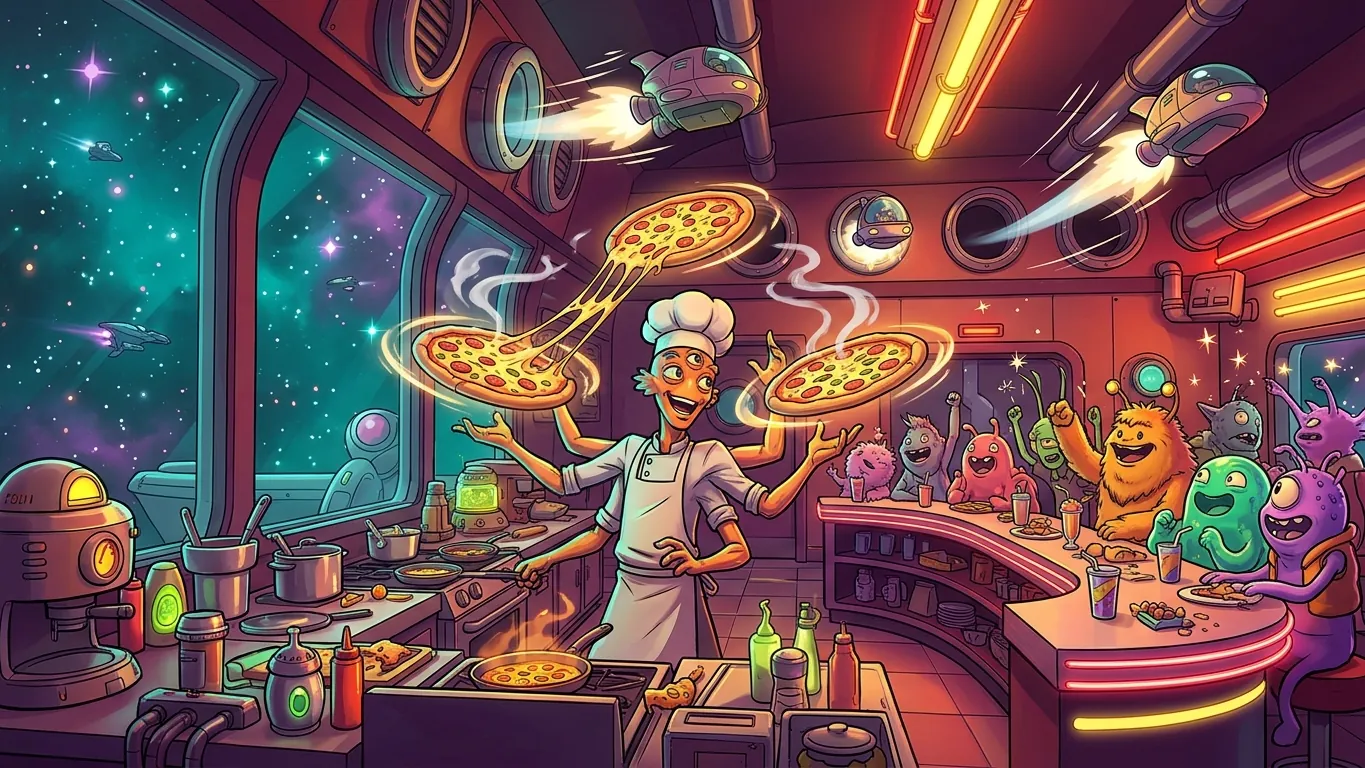
What changes when the clock is running
Rush mode takes everything you have learned in relaxed shifts and adds a timer. Orders still need reading, pizzas still need building in zero gravity and deliveries still need well-timed launches, but now the clock is always moving.
The skills are the same; the pressure is different. Small habits that barely mattered in a calm shift suddenly become important. A stray topping, a rushed launch or a misread order can cost precious seconds.
That is exactly what makes rush mode appealing to many players. It turns familiar routines into a test of focus and rhythm, and it shows clearly how much you have improved since your first day behind the counter.
Preparing before the timer starts
Good rush runs often begin before the first order arrives. Take a moment to think about which parts of the game you feel strongest in and which still slow you down. If floating ingredients are your weakness, plan to keep the counter especially tidy. If delivery timing is tricky, decide in advance how long you are willing to wait for a launch window.
It also helps to be familiar with your menu. Rush mode is not the ideal time to learn a brand-new recipe. If you have recently unlocked several dishes, a few relaxed shifts beforehand can make the timed run feel far more comfortable.
Finally, settle into a calm state of mind. A clear head is one of the most useful tools any chef can bring to a busy kitchen.
A rush mode routine
A consistent routine reduces the number of decisions you need to make under pressure.
- 01
Glance at the queue
Take in the waiting orders quickly so you know what is coming next.
- 02
Read one order fully
Focus on the current request and catch any special condition before you start.
- 03
Build in your usual sequence
Base, sauce, main topping, finishing touches. Repetition keeps your hands steady.
- 04
Launch with a quick check
Look at the destination's position and launch when the window is reasonable.
- 05
Clear and reset
Catch any drifting ingredient, then move straight to the next order.
Staying calm under pressure
When the timer is ticking, it is natural to speed up. But in a weightless kitchen, panic tends to create mess. Quick, jerky movements send toppings flying, and hurried launches can miss their windows. Paradoxically, slowing down slightly often makes you faster overall.
If you feel overwhelmed, focus only on the next action. Do not think about the whole queue or the remaining time. Just place the next topping, then the one after that. Breaking the challenge into tiny steps keeps your mind clear.
And if a run goes badly, that is fine. Every chef on asteroid Canada has had a shift where everything seemed to float away at once. The diner will be there for another try whenever you are ready.
Learning from each attempt
Rush mode is a great teacher. After each run, take a moment to reflect on what went well and what did not. Did you lose time to floating ingredients? Did you wait too long for launch windows? Did a particular kind of order catch you off guard?
The answers point to small improvements you can practise in relaxed shifts. Over time, these improvements accumulate, and your rush runs become smoother. You may also find that some kitchen upgrades feel more valuable in timed play, which can inform your future choices.
Most importantly, try to enjoy the challenge for its own sake. Rush mode is a chance to see your skills in motion, and there is real satisfaction in a run where everything clicks into place.
Related articles
 Why a cozy diner works so well in space
An opinion piece on why a small, warm pizzeria among the stars feels so inviting, from bright cartoon colours to gentle humour and playful pressure.
Read more
 A Canadian diner among the stars
An explainer on the setting of the asteroid Canada pizzeria: a diner founded by Canadian space travellers, a waystation for aliens and a theme of…
Read more
 Your first shift at the asteroid pizzeria
A calm beginner walkthrough of the asteroid pizzeria: reading alien orders, building pizzas in zero gravity and sending your first orbital delivery.
Read more