Your first shift at the asteroid pizzeria
A calm walkthrough of the opening shifts on asteroid Canada, from greeting your first alien guest to launching a pizza into orbit.

The shape of a shift on asteroid Canada
Every shift at the little pizzeria follows a loop that becomes familiar quickly. An alien guest arrives with a request, you read what they want, you build the pizza from the ingredients on hand, and then you send it out along one of the orbital delivery routes that circle the asteroid. When it reaches the right destination, the order is complete and the next guest is often already waiting.
What makes the loop interesting is everything happening around it. The kitchen sits in zero gravity, so toppings drift away if you leave them alone. Guests ask for dishes with odd conditions attached. The delivery routes keep moving, which means the timing of a launch matters as much as the pizza itself.
In the first hours, the goal is not speed. The goal is to understand how each of these pieces behaves, so that later decisions feel natural rather than rushed.
A first shift, one order at a time
If you are opening the diner for the first time, this order of operations keeps things calm and readable.
- 01
Read the whole order
Before touching a single ingredient, look at every part of the request, including any unusual condition the guest mentions. Many early mistakes come from skimming.
- 02
Gather only what you need
Pull the base and toppings for this pizza alone. Extra ingredients floating around the kitchen become clutter you will have to chase later.
- 03
Assemble in a steady rhythm
Place each item deliberately. In zero gravity a hurried motion can send a topping spinning toward the ceiling.
- 04
Watch the route before launching
Look at where the destination sits on its orbit and wait for a clean window instead of launching the moment the pizza is ready.
- 05
Reset the counter
After the delivery leaves, catch any stray ingredients so the next order starts from a clear workspace.
Keeping the counter tidy before it gets busy
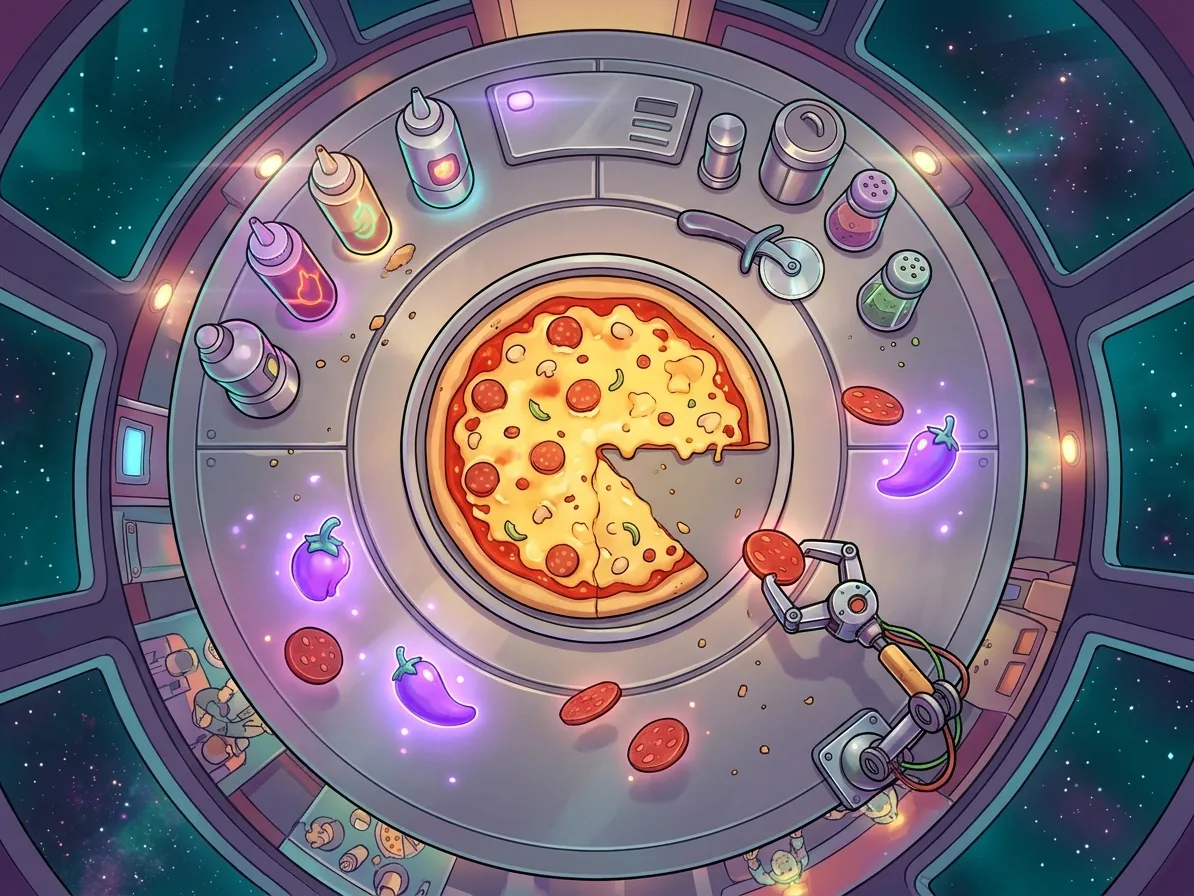
A tidy kitchen is the quiet foundation of every good shift. Because ingredients float, clutter does not stay put; it spreads. A single forgotten mushroom can drift into the path of your next assembly and cost you a few seconds while you nudge it aside. Over a long service, those seconds add up.
A helpful habit is to treat the counter like a launch pad: only the pizza in progress belongs there. Leftover toppings go back where they came from, and anything that escapes gets caught before you begin the next order.
It may feel slow at first, but early tidiness trains your eye to notice drifting items before they become a problem. That awareness carries over into busier shifts and into the timed rush mode, where a cluttered workspace is much harder to recover from.
Common habits that slow new chefs down
Most of the friction in early shifts comes from a few predictable patterns. The first is launching deliveries too quickly. A finished pizza feels like it should leave right away, but the orbital routes move, and a poorly timed launch can send the order on a longer path than needed.
The second is ignoring the small print in guest requests. Alien customers often attach playful conditions to their orders, and a pizza that looks correct can still miss what the guest actually asked for. Reading carefully is quicker than remaking a dish.
The third is trying to do everything at once. When several guests are waiting, it is tempting to start multiple pizzas in parallel. Until you are comfortable with how ingredients drift, focusing on one order at a time usually feels smoother and leads to fewer floating messes.
When to start thinking about upgrades
Once the basic loop feels comfortable, the kitchen upgrade options start to make more sense. It is worth waiting until you have noticed your own recurring frustrations before choosing improvements. If you keep losing toppings, something that helps with handling ingredients may feel valuable. If deliveries are your weak point, an improvement that supports launches may matter more.
The same patience applies to recipes. Unlocking new dishes is exciting, but each new recipe adds something to remember. Giving yourself a few relaxed shifts with the starting menu builds a foundation that makes later additions easier to absorb.
When you are ready, our articles on kitchen upgrades and recipe discovery go into more detail, and the rush mode guide explains how to put everything together under time pressure.
Related articles
 Taming floating toppings in a zero-gravity kitchen
Practical tips for cooking in the weightless asteroid kitchen: slower movements, tidy habits and ways to turn drifting toppings into a steady rhythm.
Read more
 Orbital delivery routes explained
An explainer on the moving orbital delivery routes around asteroid Canada: reading the map, choosing launch windows and balancing deliveries with cooking.
Read more
 Reading quirky alien orders without panic
How to read the playful, unusual requests alien guests bring to the asteroid pizzeria, break them into parts and serve them with fewer remakes.
Read more